



The paperclips didn't need a sales pitch. Neither do your clients.

SELLutions

Don't Take Shortcuts!

by GSchulz 21. January 2013 08:52
Tim, a software sales rep, had been having a rough day. He’d been bombarded with questions from several customers and had gotten behind on a proposal that he needed to finish before the end of the day. Then he got a call from Gene, a prospect who introduced himself by saying, "I’ve heard great things about your accounting software package. I saw a demo about a year ago, and was not in a position to purchase it at the time, but since then it’s become very apparent that I need to integrate it immediately into my system." "Wow," thought Tim. "This will be easy. It’s about time something went right today." Then Gene said, "I need to know about pricing and availability. And tech support is important, too. Tell me how that works." Tim went into his pitch. He discussed tech support in detail, covered availability and other options, and explained that the price was $8000 with 30-day terms. Gene’s response was unexpected. He said that $8000 was quite a hefty price tag and he needed a couple of days to consider the purchase more carefully. He’d call Tim back next week. Tim did a double take. "What just happened?" he thought. "This sale was in the bag, a sure thing, and now he’s thinking it over? He said he needed the software right away." And that was the end of the call. Diagnosis: Tim got lazy, plain and simple. He thought Gene was sold. All he had to do was give Gene the info he needed, then write it up. He got conned into doing a presentation without getting Gene to demonstrate why he was so excited about buying the software. The entire transaction was conducted at the intellectual level. Prescription: Don’t be lured into taking shortcuts. Don’t mistake the prospect’s enthusiasm for your product or service as a sure sale. Take the time to qualify the prospect and make sure he’s real before you make your presentation. In Tim’s case, a couple of quick questions would have made a world of difference. He might have said, "Before we discuss pricing, help me understand why this software is so important. I want to make sure the application is correct for you. Mind if I ask you a couple of questions?" Of course, you’re probing for pain and one of the most important things to find out is the financial impact of not implementing a solution. Having discovered the financial impact and, assuming it was significant, you will find that the cost of the solution disappears as an objection. Don’t take shortcuts! Don’t assume anything. Get the prospect involved at an emotional, not an intellectual, level. Use the system, qualify completely, and get the sale.   Click here to share this post.

The real truth about sales tests

by GSchulz 2. October 2012 08:33
       How do you know if that sales candidate you or your sales manager fell in love with is really the superstar you hope they are?  Before you pin your hopes on your managers’ ability to screen, recruit, interview and hire…you should know how pre-employment testing can raise your success rate in hiring new salespeople.   The keys to pre-employment testing is to make sure you’re testing for the right things.   Example:  Do you want to hire salespeople who know how to sell?  Or do you want to hire people who will sell?  Understanding the difference can make or break your career as an executive.  The right test will give you an accurate, honest assessment about your candidate and list them into the following four categories:  
 # 1. Can Sell and Will Sell:  Know what to do and consistently execute in selling situations.  Hire and train these and you’ll never need to worry about hitting budget.  
 #2. Can Sell but Won’t Sell: This is the most dangerous person to have on your team.  They know what do in selling situations but don’t consistently execute.  We keep giving them more time because “they’re just so good”. If you’ve got these on your team, find out quick if they’re fixable.  If not, replace them.  
#3. Cannot Sell But Will Sell: This person is the one that may pleasantly surprises you.  They don’t look or act like they could sell their way out of a paper bag, but they sell anyway.  Hire these, provide the right type of on-going training and you can guarantee superstar performance.  
 #4.  Cannot and Won’t Sell: Hopefully you don’t have any of these.   They’re easiest to spot and you should deal with them quickly and decisively.   What’s the right type of test?  There are so many sales pre-employment tests which fall into four types.  Here are the characteristics and limitations of each.  
Personality Tests:  Determines personality type and stability.  Cannot accurately predict whether or not people can or will sell.  It also brings up old beliefs that an outgoing personality, a real “people person” will be a good salesperson. After doing this for years, that is not a predictor of strong sale ability at all.   Benchmark Tests: These are an analysis of your “best salesperson(s) and taking the “characteristics of this person to try to hire in their image. In my opinion it is the combination of each person that makes them successful or not and to try to mirror that is setting up for failure.  
Sales Aptitude Tests:  Assess what people know about selling.  They won’t necessarily tell you whether or not someone will execute is a selling situation.  There’s a huge gap between knowing and doing.  
 Internal beliefs Test:  Measures strengths and hidden weaknesses that more accurately predicts whether or not someone will sell.   Measures guts, goals, selling system effectiveness, willingness to prospect, and their willingness to do whatever it takes even if it’s uncomfortable.   If you want to know how someone will fit in your company’s culture or how to manage them, use a behavioral test.  If you want to predict future sales performance, use an Internal belief test.    When combined with a strong recruiting process, you can virtually eliminate bad sales force hires.  Hold your managers accountable for their hiring mistakes. Sales training should come only when you have hired the right people.  
Wal-Mart founder Sam Walton knew how to hold his managers accountable for their hiring recommendations.  When his executives hired a candidate, Walton asked each to write a page outlining the candidate’s strengths and why they were hiring the candidate.  In the event that employee ever needed to be fired, Walton required the manager to write a page explaining why.  Then the manager had to travel to see Walton to personally explain the differences in the two memos.  After one of these sessions, few managers repeated a hiring mistake.
 There is nothing more important than hiring the right people. It should be an ongoing process. When you have a good strong group, then and only then should you spend time and money on training. You need the right ingredients to make a great meal even if the recipe is good, right! Email me if you would like a sample; greta@schulzbusiness.com. And ask!       Click here to share this post.

Politics and Business Decisions, Not Too Different

by GSchulz 10. September 2012 11:38
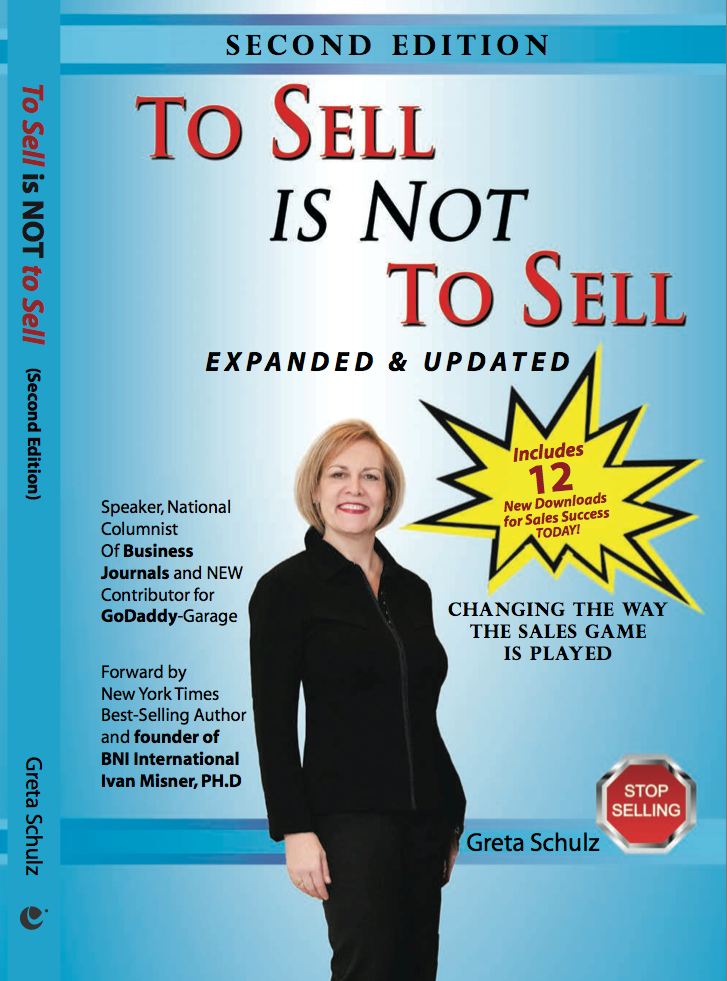
    After watching the two political conventions over the last few weeks I naturally asked people what they thought. “Oh I am definitely voting for Obama” I heard a lot yet several people I talked to said Romney was their man. I am so intrigued by how people make decisions. Maybe not all people mind you, but surely the majority of people make their decisions differently then you would probably think. The interesting part came after that question because my next question is always why do you like Obama or Why is Romney your man?, and the answers were so telling. “I really like Obama, he seems like he is a great guy. He’d be a good leader.” Or Mitt Romney has experience and seems to love our country.  “I really love Paul Ryan, he is really down to earth, and smart”. What really floored me was when I asked about their platform I got lots of blank stares. No one really knew what they stood for in particular and really didn’t seem to be concerned with it either.   I am not here to say that either candidate is better or worse then the other, nor do I profess to know politics better then anyone else, but I am amazed at the way the average person makes their decisions. Years ago in Florida there was an amendment that would, if passed, allow one particular industry to decrease taxes for themselves. Their industry only. Do you know they actually had an ad campaign that said “if we pass this amendment, we will have lower taxes”. The only ones getting lower taxes were them but the public bought it and the amendment passed! Crazy but true.   Now let’s look at selling and how this becomes relevant. Since you are typically selling to the average American, it is important to keep in mind that people make their decisions on things different then what you may think. If you believe your “platform” (features and benefits) are what is important you will often share them when a prospect asks about how you are different, often sharing one and two things in particular that you believe are most important again, to you.   Keep in mind, no one cares what you think, only what they themselves think and to uncover what they think is all that matters. We are all so caught up in telling people the important things about our product or service we forget to actually check to see if they think that is important to the person potentially looking to buy. You know what they say about assuming…   So do you think our politicians will heed this advise? It probably doesn’t matter much as long as Obama keeps asking for more time while smiling that gleaming smile and Romney keeps touting his morality.   Greta Schulz is president of Schulz Business SELLutions in West Palm Beach, Florida. She is the best selling author of "To Sell is Not to Sell". Greta does corporate training for fortune 1000 companies and she has an on-line training course for entrepreneurs. For more tips go to: www.schulzbusiness.com Click here to share this post.

Five important keys to winning when recruiting, hiring salespeople

by GSchulz 24. August 2012 16:08
from "Sellutions" South Florida Business Journal by Greta SchulzDate: Friday, August 17, 2012,
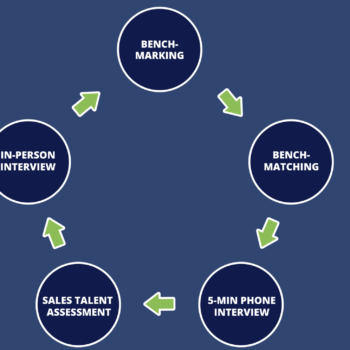
I am currently working with a well-established organization and the following questions arose (as they do fairly regularly):How can I avoid making expensive hiring mistakes?How can I hire salespeople who will actually sell on value and not price?How do I find the top sales people and recognize that they are successful?I thought I would answer them here since it’s an ongoing organizational issue.Many resumes, which are what we typically look at when we are deciding who to hire, look good. Most people can make themselves look presentable for an interview. However, most organizations spend too much money hiring the wrong sales managers and salespeople. In most cases, it takes a year to replace those ineffective individuals. That costs you thousands of dollars in lost time, wasted wages and lost revenue.Traditional hiring approaches are typically reactive, ineffective and flawed. The decision-maker becomes dissatisfied with sagging sales numbers and says: “Get some new blood in here.” This promotes a recruiting blitz involving advertising, search firms and asking employees to identify attractive talent. Then we search, sort through resumes, do interviews, make offers, and hope and pray.This time-worn process often leads to failure. Profiling or benchmarking the ideal candidate for your organization, and testing or assessing to hire the right people that fit into your organization is imperative today.Step 1: BenchmarkingIdentify the right candidate. The question CEOs need to ask themselves to determine the ideal sales candidate is: What are our primary target markets?Whom should they be calling on, and at what level in the organization? Are they doing that now?What is the financial commitment required of a prospect? This will show the comfort level of the individual selling if they always sold at that level.What are your competitive advantages? Are you the least expensive or most expensive in your industry? Are you very well known or brand new?What is your prospecting approach? Are you very proactive? Do you make cold calls from a list? What’s the level of product knowledge in-house and in the community?Step 2: SearchCompanies that practice continual sales hiring – as opposed to as-needed hiring – do things differently. A salesperson is an asset, not a liability. So why are you not always looking for someone better than your best salesperson? If your approach is recruiting top-level salespeople, they are not always available when you need them. The best ones aren’t looking for a job for long, if at all.Continuous recruiting starts with developing a staffing plan that helps you manage both the additional and potential reductions in your staff. Developing a plan months in advance will help you avoid crisis hiring. Make recruitment an important aspect of your corporate culture.Step 3: QualifyWhether you outsource your recruiting or do it internally, make sure you know what you are looking for. Understand what qualities you’re looking for and know where to look.Pre-qualifying on the phone is important. Your salespeople will likely be on the phone at least some of the time, so you need to know how they handle themselves. Find that out by asking some questions and seeing how they react, getting a feel for tonality and articulation. This will also help you avoid wasting time on an unnecessary meeting.Step 4: Assessing the candidateUse an objective performance test to disqualify or validate your candidate. We tend to make decisions in our gut. Though our gut feeling is very strong, it’s also based on our own personal history and experiences. That is a good thing, but it needs to be used in addition to something that’s more intellectual and factual. Having a test to be able to look at the candidate objectively is very important.Step 5: The interviewThe interview is the most critical step. An effective interviewer sets the stage for the candidate to act and respond in the same manner he or she would with a prospect.To separate the high achievers from the ineffective salespeople, you need to stay away from the ”so tell me about yourself approach.” Get the candidate through a tough selling situation right away and see how they handle themselves.For example, it’s important to push the candidate back some. Put them in a situation they’ll be when they try to sell to a prospect. They are not going to have an easy situation every time.I know this may be a little uncomfortable for most of us, but it is important to get a feel for how they react with a little pressure because that’s what sales is about. They will be getting pressure out in the field, so let’s give them a little pressure in the interview and see if they can stand up to the challenge.Greta Schulz is a sales consultant for businesses and entrepreneurs. For more sales training tips and tools, or to ask her a question, go to www.schulzbusiness.com or email greta@schulzbusiness.com. Click here to share this post.

Push your sales team to abandon leads that are not worth cost of pursuit

by GSchulz 10. August 2012 11:40
As a principal of your organization, you clearly understand the importance of sales in the organization. You are wearing too many hats to play sales manager, as well, but do you really know how they are doing? If they aren’t hitting their revenue goals, do you know why? Is it a viable reason? Do they have a battle plan to change that?You have two challenges when your sales force prepares for battle:Challenge No. 1Like any kind of warfare, you have a distinct advantage when you can tap good and reliable intelligence. Here’s the problem: Your salespeople don’t get enough accurate intelligence about their prospects. As a result, their pipelines are filled with flaky opportunities. And your sales managers don’t have enough guts to call them on it.Here’s the litmus test: When your salespeople submit their forecasts, do you or your managers “adjust” them down for realism? It’s typically easier for salespeople and their managers to discuss why they didn’t win business, instead of asking themselves the right questions before going to battle.Here are some of the right questions:1. Can we win and should we pursue this opportunity?2. If yes, how do you know? What is the reasoning? A guess? A hunch?3. Which strategy should we adopt to ensure that we win? Why?To begin, ask your salespeople: “How much does it cost to win a new account?” Calculate the actual costs associated with generating a lead, a contact, an appointment, a proposal and a sale. Now, add in the opportunity cost of missed business they could have won if they weren’t wasting time on business that won’t close quickly.If you’re like most selling organizations, the cost per pursuit is several hundred or thousands of dollars. Multiply that by the number of opportunities you chased and didn’t close in the last 12 months. Staggering, isn’t it?Before your salespeople charge off to fight the next battle, ask them: “If this was your money, would you spend it?”Challenge No. 2Your salespeople don’t do enough planning work before going to battle. Before going into battle again, make sure your salespeople can answer these questions (honestly):• What are you trying to sell and, most importantly, why? Sounds simple enough until you actually try to quantify it.• Is the project funded? What if there’s not enough? Who has discretionary use of the funds? Who can get more? Are we speaking to the right person here?• What is the sale worth to the organization? Does the ROI justify the investment of time, money and effort?• Have we sold this prospect anything in the past? Who? What? Where? When? How? Why?• How many contacts have you already had with this prospect? How many phone calls, face-to-face meetings, etc.? Do you have a clear next step?• Do you have an organizational chart? Do you have an inside coach?• What has been (or will be) your sales strategy?• Where are you in the selling process? Here is a checklist:1. Were you invited in, or did you beg for an appointment?2. What were the prospect’s reasons for seeing you?3. What were the challenges, problems and frustrations you identified in the interview?4. How important is it to the prospect to fix those problems?5. How committed is the prospect to fixing those problems? (Time, effort, money, willingness to fail.)6. What agreement have you and the prospect reached concerning the decisions that will be made each step of the way?Few salespeople understand the cost of pursuing sales and often fill their funnels with bad business. Fewer think through winning strategies before going into sales “battle.”Ask your salespeople these fundamental sales questions before committing resources to a battle you cannot win.Successful sales professionals qualify vigorously and religiously before committing time and energy, so their closing ratios are 90 percent or better.So, what are yours?Greta Schulz is a sales consultant for businesses and entrepreneurs. For more sales training tips and tools, or to ask her a question, go to www.schulzbusiness.com or email greta@schulzbusiness.com. Click here to share this post.

Tag cloud